
Modules
One platform, every part of production
Each module solves a specific operational need, and together they give you a single, connected view of the shop floor. You do not have to take all of them at once. Most factories start with production monitoring on one line, then add the modules that answer the next question.
Explore the modules
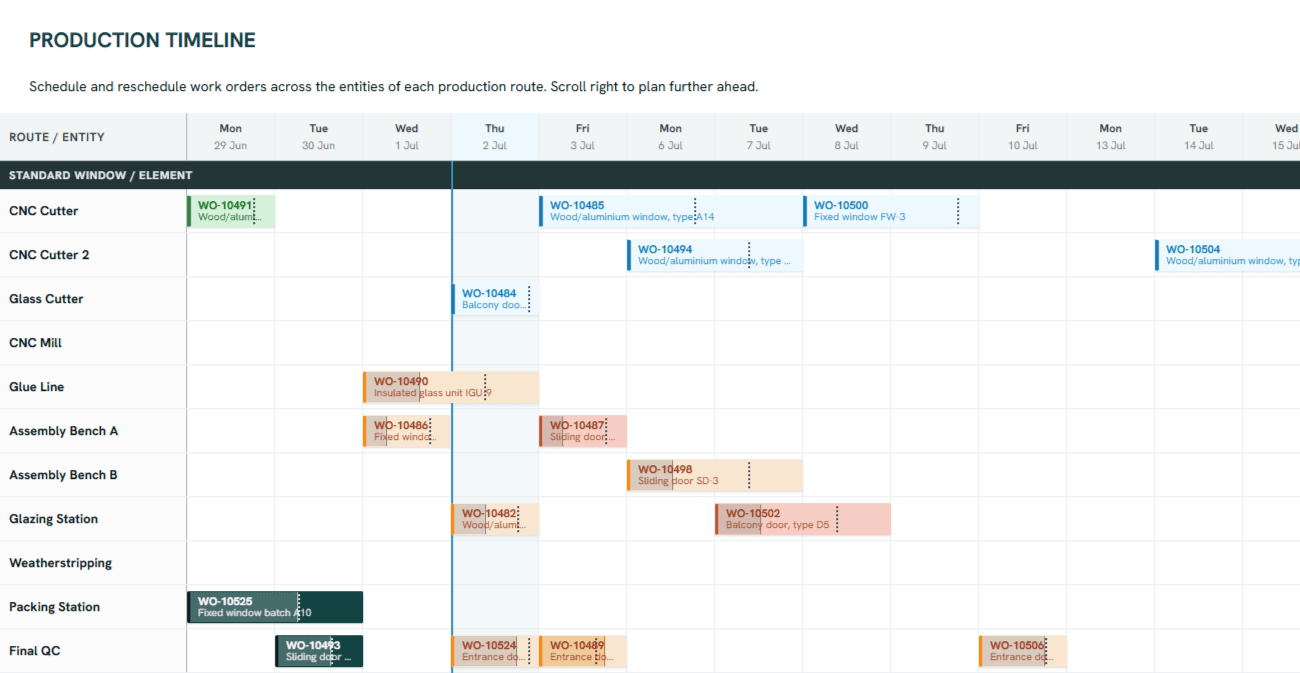
Planning
Routes, timelines, and the capacity you actually have.
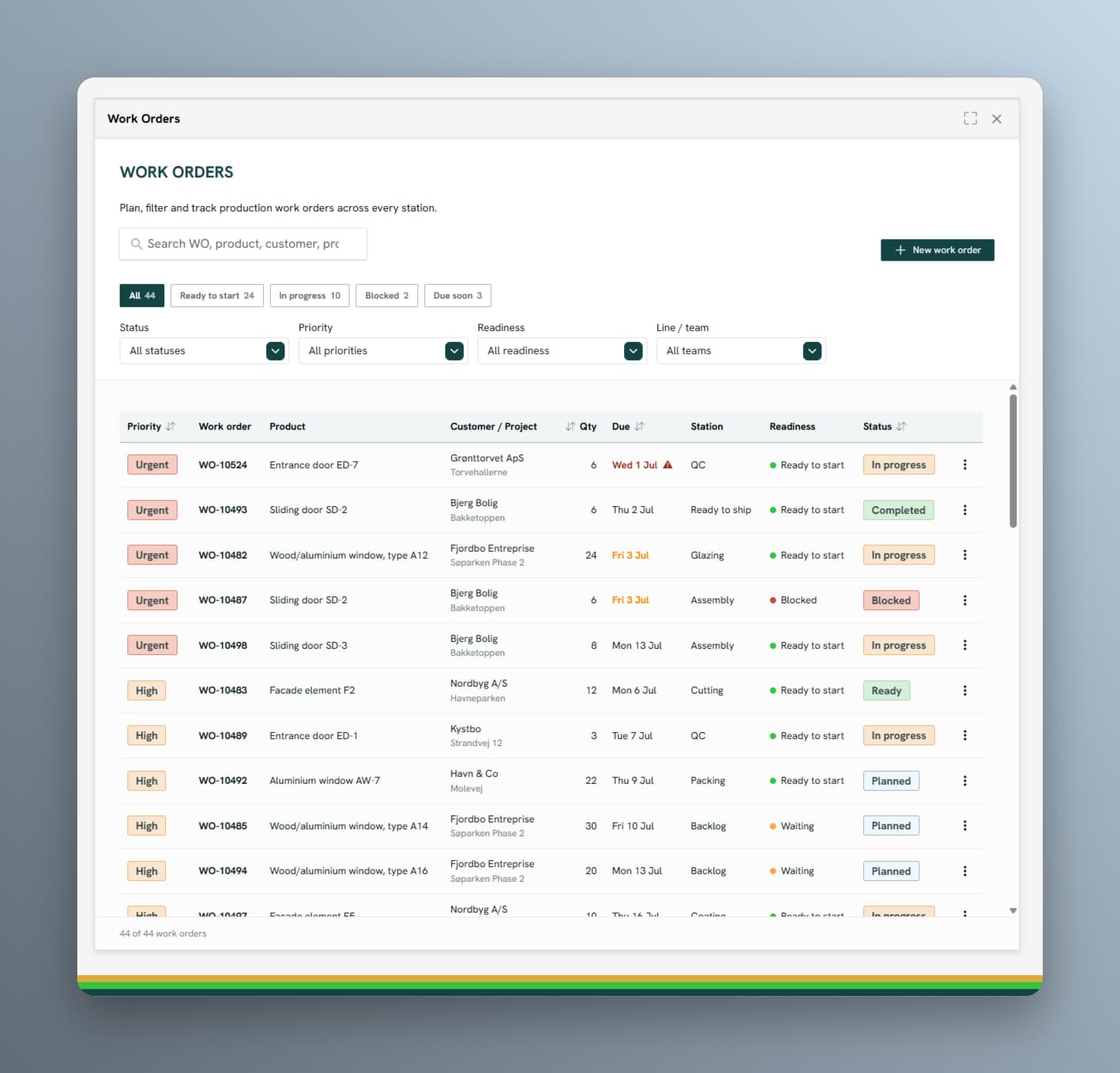
Orders
Start, stop, and report at the machine or workstation. ERP optional.
Quality
Digital checks, deviations, and full traceability.
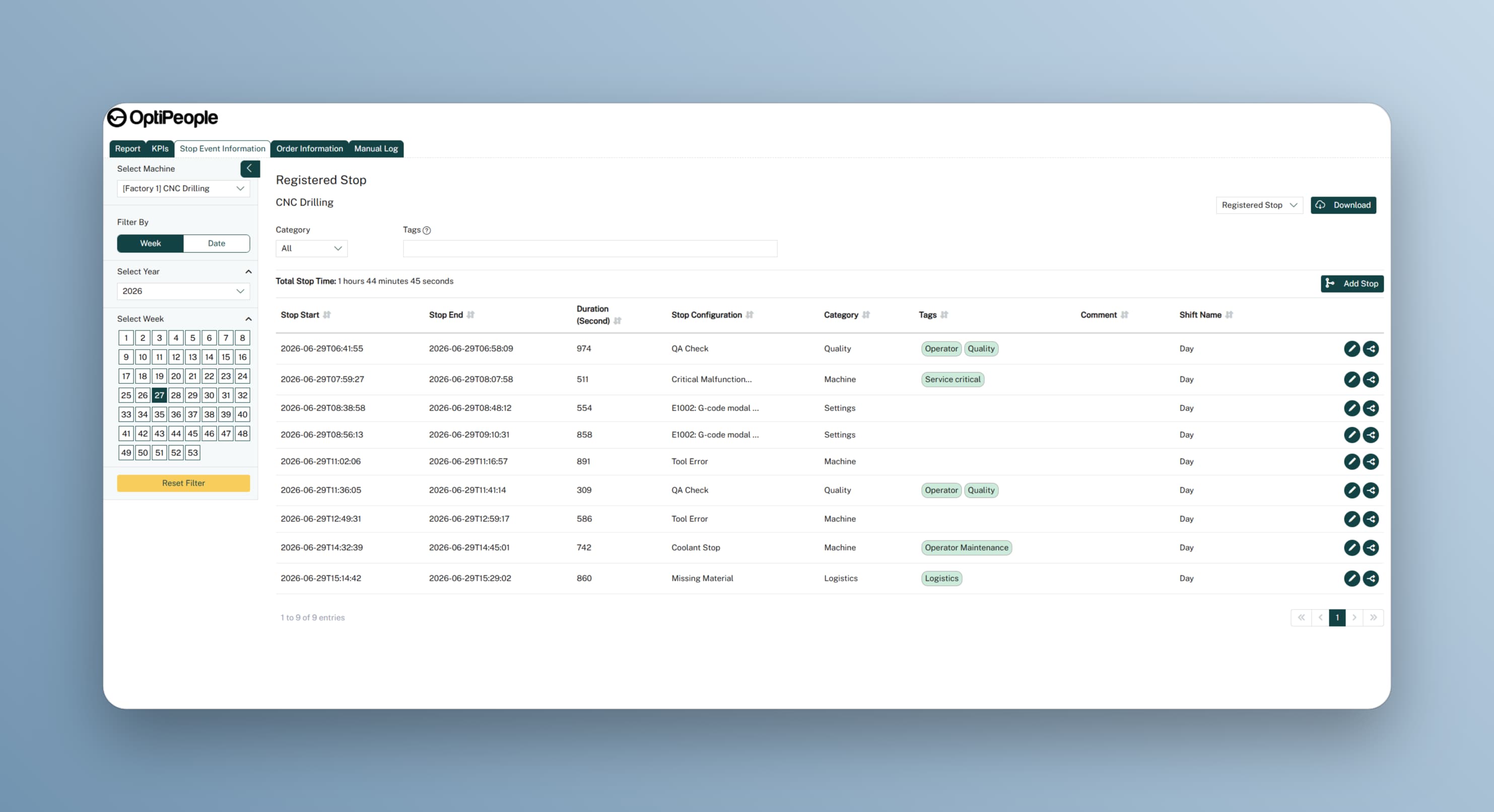
IoT
Consolidate the machines, hardware, and systems you already run.
OEE
Live OEE, downtime, losses, and shift performance.
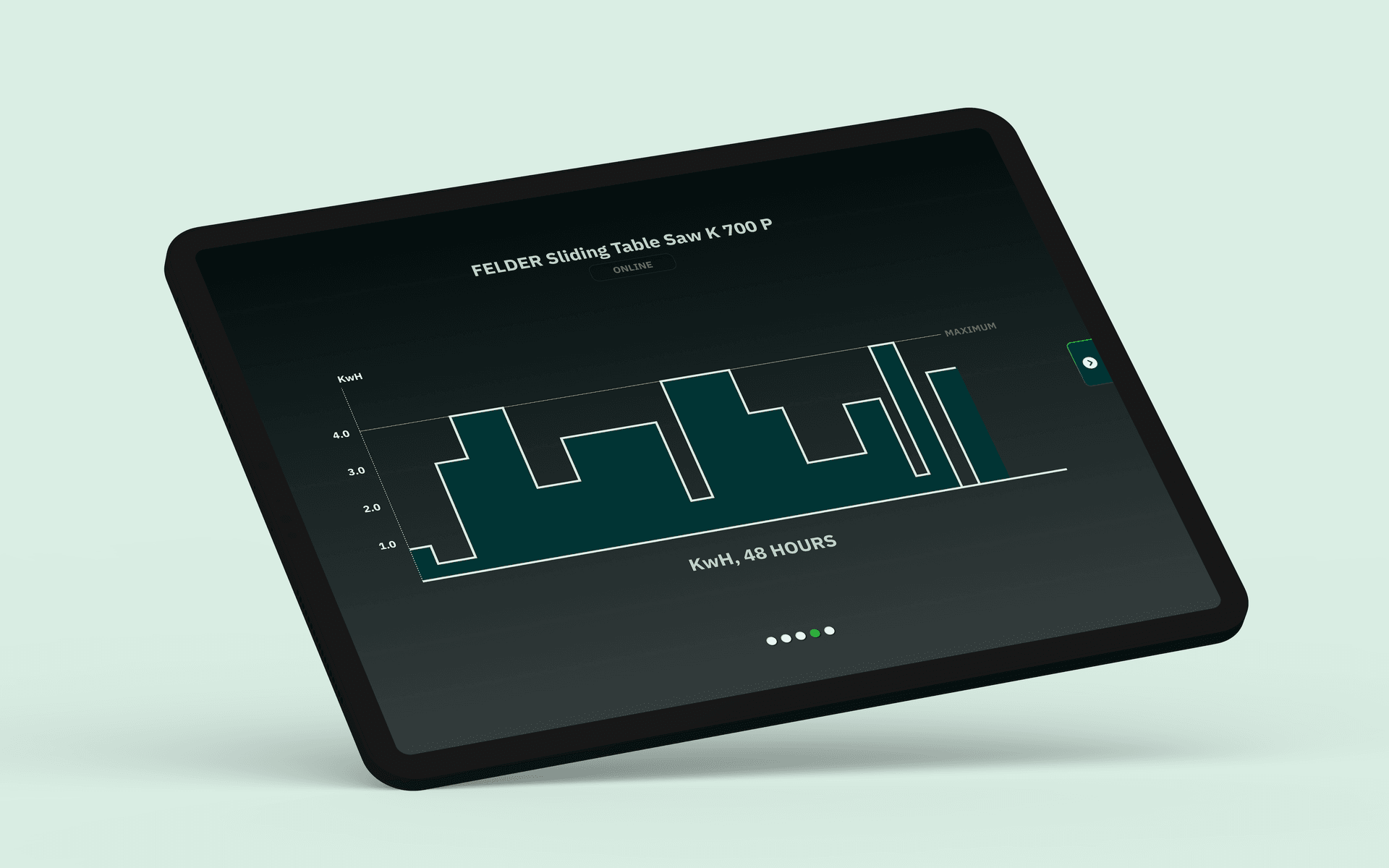
EMS
Energy consumption connected to production output.
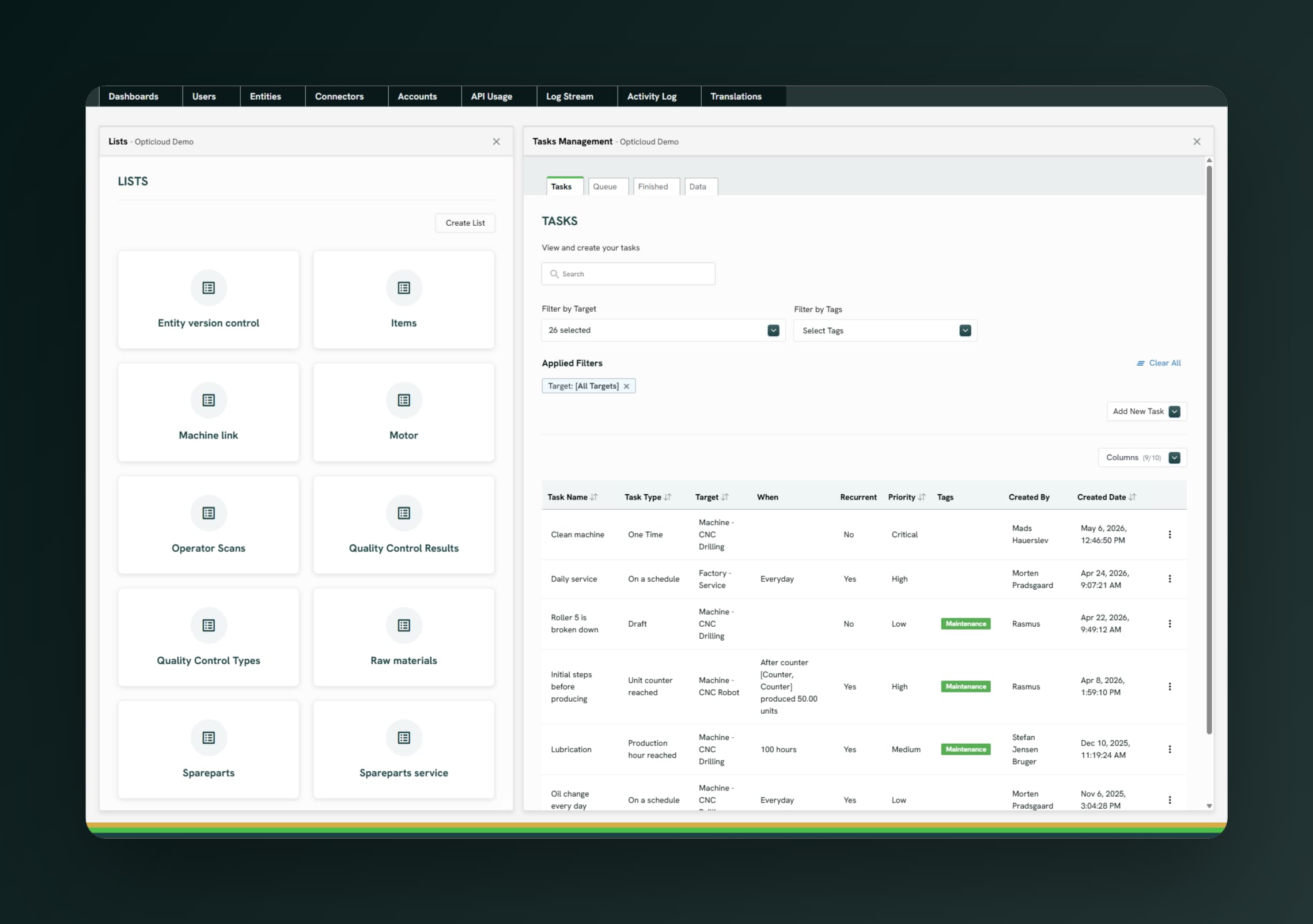
Maintenance
Preventive and predictive planning, driven by IoT data.
Documents
Work instructions, drawings, and certificates, wherever the work happens.
AI Agents
Agents and copilots that work on your own production data.
Built on one data foundation
The modules are not separate products stitched together. They read from the same machine and workstation data, the same order data, and the same time model, so a stop registered on the floor shows up in the OEE figure, the maintenance history, and the monthly report without anyone re-entering it.
Start where the pain is
There is no required order. If downtime is the problem, start with production and stop-cause registration. If unplanned breakdowns are the problem, start with maintenance. If energy cost is under scrutiny, start there. Each module is useful on its own and gets more useful next to the others.
Old machines included
Connecting a factory rarely means connecting only new equipment. OptiPeople Data Platform reads modern controls over standard industrial protocols, and for older machines without a usable interface, sensors measure the signals directly. Age is not what decides whether a machine can be measured.
Data you can take with you
Everything the platform collects is available through the API and can be published over MQTT, so your production data can feed Power BI, a data warehouse, or your own systems. The platform is a place your data works, not a place it gets locked in.