
Insights
Industry 5.0: What is the fifth industrial revolution?
by OptiPeople Team
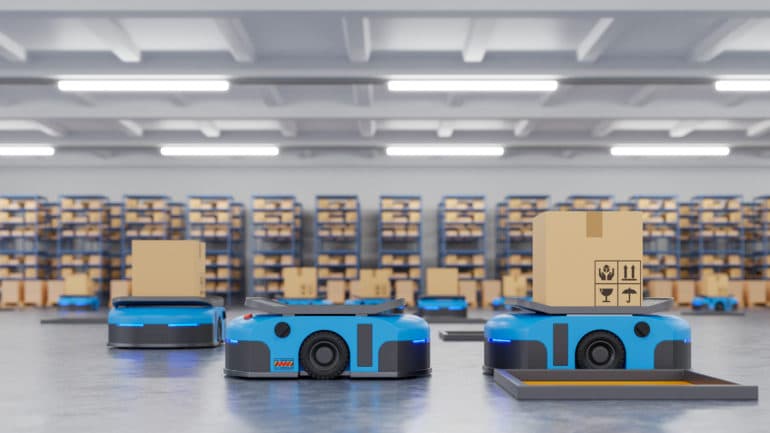
The fifth industrial revolution, or Industry 5.0, is the next stage after Industry 4.0. It keeps the connected, data-driven factory but changes the goal: technology should work with people, not replace them. The European Commission describes it with three aims: production that is human-centric, sustainable and resilient.
What is the fifth industrial revolution?
Industry 5.0 is a way of running manufacturing where people and smart machines work side by side. Robots, sensors and software take the repetitive, heavy and precise work. People bring judgment, creativity and the ability to handle the unexpected.
The term became widely used after the European Commission published its report Industry 5.0: Towards a sustainable, human-centric and resilient European industry in January 2021. It is less a new technology than a new purpose for the technology factories already have.
Its three pillars:
- Human-centric. Technology adapts to the worker, not the other way around. Operators get tools and data that make their work safer, easier and more meaningful.
- Sustainable. Production uses less energy and material, and waste is measured and reduced.
- Resilient. Factories can absorb shocks such as supply problems, demand swings or a key machine going down.
The five industrial revolutions at a glance
| Revolution | When | What changed |
|---|---|---|
| 1st: Industry 1.0 | Late 1700s | Steam power and mechanized production |
| 2nd: Industry 2.0 | Late 1800s | Electricity, assembly lines and mass production |
| 3rd: Industry 3.0 | 1970s | Electronics, computers and programmable automation (PLCs) |
| 4th: Industry 4.0 | 2010s | Connected machines, IoT, cloud and data across the factory |
| 5th: Industry 5.0 | 2020s | People and machines working together, with sustainability and resilience as goals |
What is the difference between Industry 4.0 and Industry 5.0?
Industry 4.0 is about connecting machines and digitalizing production. Its main goals are efficiency and automation.
Industry 5.0 builds on that foundation and asks what the technology is for. Instead of the "lights-out" factory with no people, it aims to combine machine precision with human skill. It also adds goals that go beyond output: the wellbeing of the people on the floor, energy use and the ability to keep running when things go wrong.
| Industry 4.0 | Industry 5.0 | |
|---|---|---|
| Focus | Technology and connectivity | People, planet and resilience |
| Role of people | Often replaced by automation | Work alongside machines and decide |
| Typical technology | IoT, cloud, big data, automation | Collaborative robots (cobots), AI assistants, real-time data for operators |
| Main goal | Efficiency and productivity | Efficiency plus wellbeing, sustainability and robustness |
| Products | Mass production | More customization and smaller batches |
Which technologies are part of Industry 5.0?
- Collaborative robots (cobots) that share a workstation with an operator.
- AI that suggests or explains, while a person makes the call.
- Real-time production data on screens at the machine, so operators see what is happening and react.
- Digital twins and simulation to test changes before they reach the line.
- Energy and resource monitoring to cut consumption and waste.
- 3D printing for spare parts and customized products.
Are we in Industry 4.0 or 5.0?
Most manufacturers are still building their Industry 4.0 foundation. Many machines are not connected yet, and data often lives in spreadsheets or on paper.
That foundation comes first. You cannot put people at the center of a data-driven factory without the data. In practice that means:
- connecting machines and reading the data they already produce
- making production, stops and energy use visible in real time
- giving operators and managers the same picture of what is going on
- using that picture to improve together
The OptiPeople IoT module collects data from the machines and systems a factory already runs. The Production module turns it into live OEE and stop reasons on screens at the line, for the people who run it.
What are the advantages and disadvantages of Industry 5.0?
| Advantages | Disadvantages |
|---|---|
| Safer, less repetitive work for people | Investment in new technology and training |
| Better quality from machine precision plus human judgment | Skills gap: people need to learn new tools |
| More customized products and smaller batches | Some jobs change or disappear |
| Lower energy use and less waste | Uneven access for smaller companies |
| Factories that recover faster from disruption | More complex to set up in the early stages |
Frequently asked questions
What is the 5th industrial revolution?
The 5th industrial revolution, also called Industry 5.0, is the stage after Industry 4.0 where people and smart machines work together. Its goals are production that is human-centric, sustainable and resilient, not only efficient.
When did the fifth industrial revolution start?
There is no single start date. The term became widely used in 2021, when the European Commission published its Industry 5.0 report. Most factories are moving into it gradually from Industry 4.0.
Does Industry 5.0 replace Industry 4.0?
No. Industry 5.0 builds on Industry 4.0. Connected machines and data are still the foundation. Industry 5.0 changes how that technology is used and what it is used for.
What is an example of Industry 5.0?
An operator working next to a cobot that does the heavy lifting, with a screen at the station showing live output, stops and energy use. The machine handles the repetitive work, and the operator decides what to fix first.