
Insights
kWh per produced unit (v50)
by OptiPeople Team
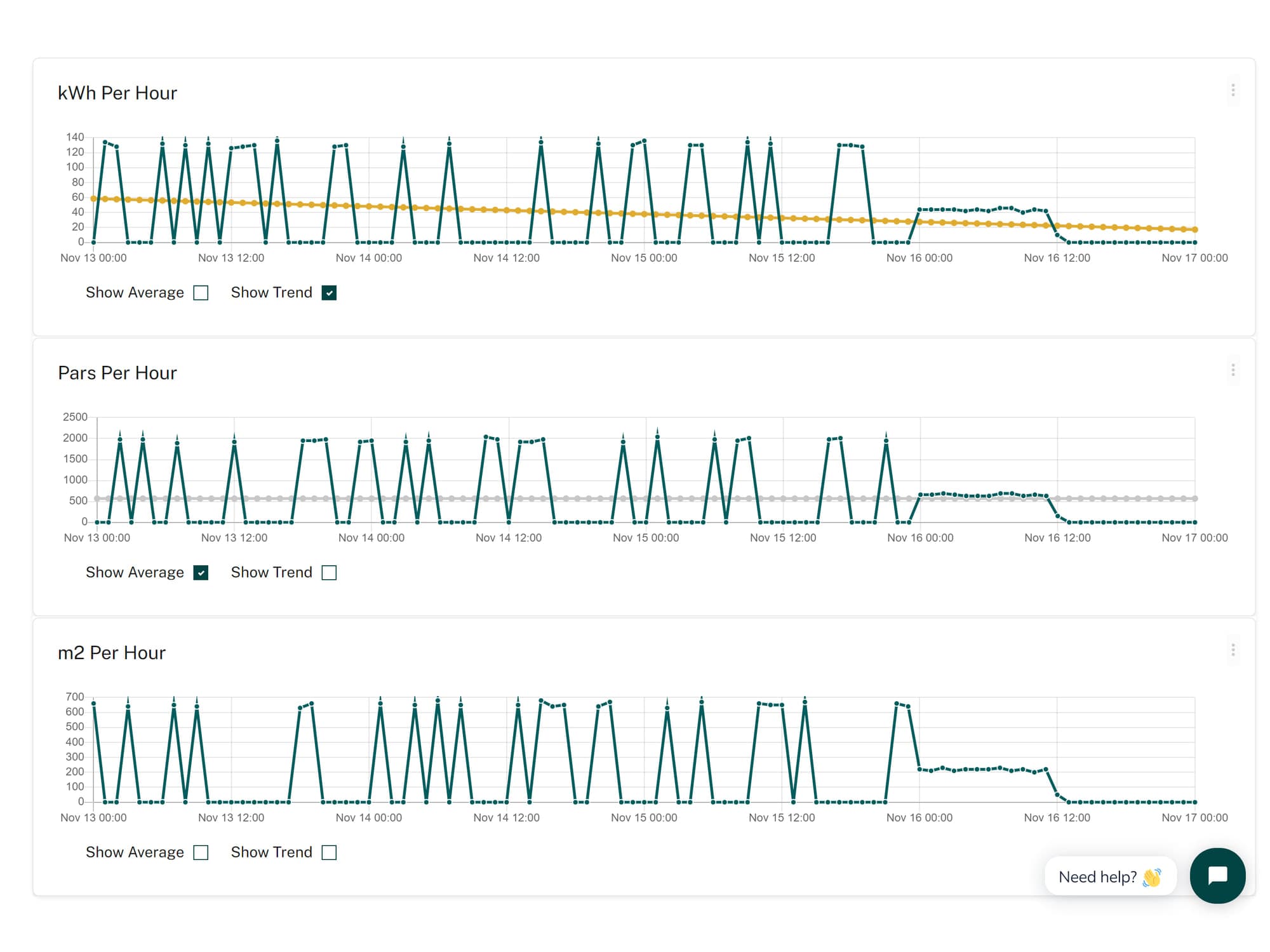
With OptiPeople Data Platform, manufacturers can analyze energy consumption in great detail and with the granularity needed for real production decisions.
No matter how fast output is, the platform can show how much energy is used to create each part. That creates a stronger basis for optimizing both production and energy demand.
Optimizing costs with kWh per produced unit
So how do customers use this metric to optimize both energy and efficiency at the same time?
Energy efficiency
By looking at energy consumption directly, teams can identify the best hours for production and plan output when electricity prices are lowest.
OptiPeople Data Platform can also include kWh prices in the platform, even up to 24 hours ahead. Combined with production-order data, this makes it possible to see which orders have:
- the highest energy demand
- the lowest efficiency
That means high-energy orders can be planned when energy prices are lower.
Planned maintenance
Breakdown maintenance is the most expensive form of maintenance. It affects delivery, extends repair time, and often pulls more people into the issue than expected.
Planned maintenance before breakdown saves significant time, money, and resources. It can also be scheduled for periods where electricity prices are high, making maintenance windows even more efficient from an energy-cost perspective.
Reducing kWh per produced unit
There are several ways to reduce energy cost per produced unit.
Turn off equipment when it's not needed
OptiPeople Data Platform can help control things at both factory and machine level, for example:
- truck charging
- lights
- heating
- machine shutdown
When operators go on break or finish the day, non-critical systems can be turned off automatically. That reduces waste without requiring workers to change behavior.
Fewer changeovers reduce energy waste
As products become more customized, factories often see more changeovers and more complexity.
Changeovers cost time, and more time often means more energy use. By logging changeovers and order numbers, it becomes much easier to see:
- what takes longest to change
- where errors occur
- how to schedule production with fewer unnecessary changeovers
That directly reduces machine runtime and lowers energy use per produced unit.
Speed up production and increase performance
The better a machine runs, the more units it can produce for the same energy input.
If the machine is running, it should run as efficiently as possible. Higher performance often means more units produced for roughly the same energy consumption, which improves energy efficiency per item.